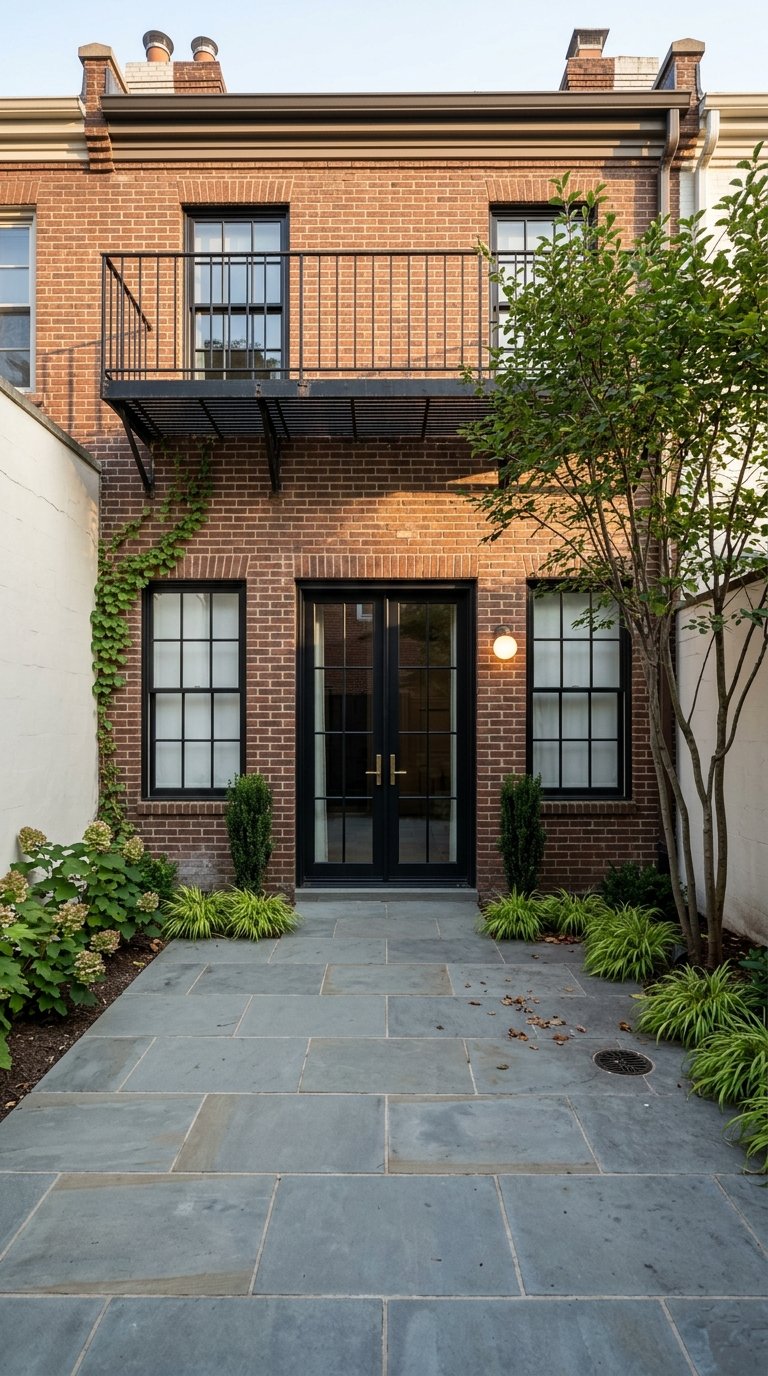
If you own a Brooklyn brownstone, the pricing question is rarely simple. In today’s market, buyers are still paying strong numbers for the right property, but they are also quick to pass on a listing that feels ambitious from day one. If you want to price strategically, you need more than a neighborhood headline or a hopeful estimate. You need a sharper read on townhouse-specific comps, condition, layout, and block-by-block demand. Let’s dive in.
Why pricing discipline matters now
Brooklyn brownstones are still trading in a firm market, but the tone is selective. Douglas Elliman and Miller Samuel reported a Q4 2025 Brooklyn brownstone matrix median sale price of $3.1 million and an average price per square foot of $1,665. In the broader 1 to 3 family segment, Q3 2025 logged 1,248 closings, a $1.66 million average sale price, and 3.6 months of supply.
That mix tells you something important. There is still demand for quality townhouses, and limited supply continues to support values. At the same time, the market is not broadly rewarding sellers who reach too far on price.
Brown Harris Stevens also reported that first-half 2025 prices for 1 to 3 family homes rose 8% year over year. In the higher-end brownstone cluster of Boerum Hill, Brooklyn Heights, Carroll Gardens, Cobble Hill, and Dumbo, the average sale price reached $4.78 million. Those numbers support confidence, but they do not replace precision.
Use townhouse comps, not neighborhood averages
One of the biggest pricing mistakes is leaning too heavily on broad neighborhood medians. Those figures often blend co-ops, condos, and houses, which can distort what a brownstone is actually worth.
Brooklyn Heights is a clear example. Recent median sale figures ranged from about $1.3 million to $2.685 million across different market trackers. That is not necessarily a contradiction. It is a reminder that mixed housing data is only a rough backdrop, not a pricing model for a townhouse.
For a brownstone seller, the better approach is to anchor pricing to townhouse-only comps in the same micro-market. You want to compare like with like, especially when the local market includes very different property types trading at very different price points.
What the brownstone belts show
The core brownstone neighborhoods continue to show strong pricing, but not all submarkets trade the same way. Brown Harris Stevens reported first-half 2025 average and median prices of $3.18 million and $2.7625 million for Park Slope, South Slope, and Windsor Terrace. In Boerum Hill, Brooklyn Heights, Carroll Gardens, Cobble Hill, and Dumbo, the average and median were notably higher at $4.78 million and $3.825 million.
Craig Yoskowitz’s Q4 2025 townhouse report sharpened the picture further. In Park Slope and Gowanus, single-family townhouses averaged $4.6 million, while multi-family townhouses averaged $3.0 million. In Carroll Gardens, Boerum Hill, and Red Hook, the averages were $4.75 million for single-family and $3.70 million for multi-family.
At the top end, Brooklyn Heights, Cobble Hill, and Dumbo showed an even wider spread. Single-family townhouses averaged $11.0 million, compared with $5.4 million for multi-family townhouses. That gap highlights how strongly buyers value a simpler, end-user-friendly ownership setup when location is comparable.
Condition can shift value dramatically
Not all brownstones compete in the same buyer pool. A renovated, move-in-ready home often attracts stronger demand than an estate-condition property, even when square footage and address look similar on paper.
PropertyShark found that citywide, newer homes sold at a median $1.15 million, or 58% above older housing stock. In some Brooklyn pockets, renovated homes also traded dramatically above older stock. In Brooklyn Heights, newer homes were reported above $4 million, roughly four times older-stock levels.
Townhouse market reports point in the same direction. Renovated homes in Park Slope, Brooklyn Heights, and Carroll Gardens have been moving quickly, supported by low inventory and buyers who are willing to pay for turnkey condition. If your brownstone needs substantial work, pricing it like a finished home can cut off serious interest early.
Pricing renovated homes
If your property is updated, design-conscious, and operationally ready, you may be able to hold firmer on price. Buyers in this segment are often paying for speed, certainty, and ease. A polished presentation plus disciplined pricing can create stronger early momentum.
That does not mean every renovation earns a blanket premium. The quality of work, layout, and neighborhood context still matter. The key is to compare your home to nearby finished sales, not simply to the highest sale in the ZIP code.
Pricing estate-condition homes
If your brownstone needs structural, mechanical, or cosmetic updates, the market will likely treat it as a project. That means buyers will mentally price in renovation costs, timing, and risk. A strategic ask should reflect that reality from the start.
This is where sellers sometimes lose leverage. If an estate-condition home is priced too close to turnkey comps, buyers may skip it rather than negotiate. A sharper opening price can broaden the audience and improve the odds of real competition.
Layout matters as much as finishes
In Brooklyn brownstone pricing, layout can be just as important as condition. The Q4 2025 townhouse data showed single-family townhouses outperforming multi-family buildings across every major cluster studied.
That pattern does not mean every owner’s triplex will beat every rentals-over-rentals building. Still, it strongly suggests that buyers place a premium on simpler use, cleaner occupancy, and more flexible end-user living. If your layout supports that lifestyle, it may justify stronger pricing than another townhouse on the same street with a more fragmented setup.
If your building is configured as multiple units, pricing should reflect the actual buyer pool for that product. A townhouse that appeals to investors, end users, and multigenerational households may have depth of demand, but it still should not be benchmarked exactly like a turnkey single-family brownstone.
Micro-location still moves the number
In Brooklyn, not all blocks trade equally. Buyers often pay more for homes near well-known local amenities, convenient retail corridors, transit access, or especially prized townhouse blocks.
The market backdrop supports that view. Park Slope is closely tied to Prospect Park, historic brownstone streets, and transit access. Brooklyn Heights draws value from the Promenade and subway convenience. Carroll Gardens stands out for leafy streets, front gardens, local retail, and limited supply of larger buildings.
For sellers, that means block quality should be part of the pricing conversation. A similar brownstone near Prospect Park West, the Brooklyn Heights Promenade, or major retail corridors may justify a stronger ask than a comparable property on a less convenient or less visible block. That said, the premium still has limits, and today’s buyers are measuring value carefully.
Why overpricing is a real risk
The best evidence against aspirational pricing is how close recent sales are to list price. Redfin reported sale-to-list ratios of 99.5% in Park Slope, 99.2% in Brooklyn Heights, and 99.7% in Carroll Gardens. Only about 0% to 4.3% of homes sold above list price, with roughly 49 to 57 days on market.
That is a healthy market, but it is not a market that forgives a pricing miss. Buyers are often willing to pay near ask for the right home. They are simply not showing much appetite to chase a number that starts too high.
This is why disciplined initial pricing matters so much. A realistic launch can create urgency, drive early showings, and position you for stronger negotiation. A high anchor that leads to reductions can have the opposite effect.
A practical pricing framework for sellers
If you are preparing to sell a Brooklyn brownstone, a smart pricing strategy usually starts with the closest finished comp and then adjusts for your property’s specific strengths and tradeoffs.
Focus on these factors:
- Property type: Compare your home to townhouse-specific sales, not blended neighborhood averages.
- Condition: Separate turnkey homes from estate-condition projects.
- Layout: Account for whether the property functions like a single-family residence or a more segmented multi-family building.
- Micro-location: Consider block quality, nearby amenities, and local convenience.
- Outdoor space and scale: Garden, terrace, width, and overall proportions can affect buyer perception and pricing power.
When those factors are weighed together, the pricing picture becomes much clearer. You are no longer selling “a brownstone in Brooklyn.” You are pricing a very specific asset in a very specific micro-market.
The strategic takeaway
Brooklyn brownstones still command serious attention, especially when they are well located, well configured, and move-in ready. But today’s market is rewarding precision over prestige and evidence over optimism.
If you price against the right townhouse comps, adjust honestly for condition and layout, and stay grounded in what buyers are actually paying, you give yourself a better chance at a strong launch and a cleaner negotiation. That kind of discipline is often what separates a listing that sits from one that sells on favorable terms.
If you are weighing where your brownstone should come to market, a data-backed pricing strategy can make all the difference. For tailored guidance, valuations, and a polished go-to-market plan, schedule a private consultation with Matthew Melinger.
FAQs
How should you price a Brooklyn brownstone in today’s market?
- You should start with townhouse-only comps in the same micro-location, then adjust for condition, layout, outdoor space, and block quality.
Why are neighborhood median prices less useful for Brooklyn brownstones?
- Neighborhood medians often combine co-ops, condos, and houses, which can make them too broad to price a townhouse accurately.
Do renovated Brooklyn brownstones sell for more?
- Renovated and move-in-ready homes often command stronger pricing and faster demand than estate-condition homes, especially in neighborhoods like Park Slope, Brooklyn Heights, and Carroll Gardens.
Does townhouse layout affect Brooklyn brownstone value?
- Yes. Recent townhouse data showed single-family brownstones outperforming multi-family townhouses across several key Brooklyn neighborhood clusters.
Is overpricing a Brooklyn brownstone risky right now?
- Yes. Recent sale-to-list ratios in Park Slope, Brooklyn Heights, and Carroll Gardens were close to full ask, which suggests buyers are paying fair prices but not giving much room for aspirational pricing.