Wondering whether a Brooklyn co-op will feel easier, larger, or more affordable than a Manhattan co-op? You are not alone. Many buyers start with a broad New York City search, then realize that while co-ops follow the same basic ownership structure in both boroughs, the day-to-day buying experience and the financial picture can look very different. This guide breaks down how Brooklyn co-ops differ from Manhattan co-ops so you can compare price, space, board expectations, and building style with more confidence. Let’s dive in.
Co-op basics stay the same
In both Brooklyn and Manhattan, buying a co-op means you are not purchasing real property in the same way you would with a condo. Instead, you buy shares in a corporation that owns the building, and those shares are tied to a specific apartment. You also receive a long-term proprietary lease and pay monthly maintenance based on the apartment’s share allocation, according to the New York Attorney General’s co-op guidance.
That legal structure is the same across boroughs. Co-op boards are elected by shareholders and operate under bylaws, the proprietary lease, the certificate of incorporation, and house rules. Because board members are often fellow shareholders serving without pay, the approval process can feel personal and highly specific to the building.
Brooklyn vs. Manhattan pricing
The biggest difference most buyers notice first is price. In Q4 2025, Manhattan’s co-op median sales price reached $825,000, while Brooklyn’s co-op median was $499,500, based on Elliman market data. That spread is one reason many buyers widen their search into Brooklyn.
StreetEasy’s January 2025 snapshot shows the gap even more clearly for two-bedroom units. The median asking price for a two-bedroom co-op was $1.25 million in Manhattan versus $465,000 in Brooklyn, according to StreetEasy’s market analysis. In practical terms, Brooklyn often gives you more space for your budget.
Brooklyn is not one price band
It is important to treat Brooklyn as a collection of submarkets rather than a single co-op market. In Q4 2025, the co-op median was $350,000 in South Brooklyn and $920,000 in Northwest Brooklyn, according to Brooklyn market reporting from Elliman. That is a very wide range.
So when you compare Brooklyn to Manhattan, the real question is often which part of Brooklyn you are considering. A buyer looking in Northwest Brooklyn may find pricing much closer to Manhattan than expected, while a buyer exploring South Brooklyn may see a much larger value gap.
Space and layouts often favor Brooklyn
If your goal is to get more room, Brooklyn often has the edge. The 2023 NYC Housing and Vacancy Survey found that Manhattan had 504,600 studios and one-bedrooms, equal to 54% of the borough’s housing stock, while Brooklyn had the city’s largest number of homes with three bedrooms or more at 348,800, with 31% of Brooklyn units in that larger category, according to the city survey findings.
That does not mean every Brooklyn co-op is large or every Manhattan co-op is compact. It does mean your odds of finding a bigger layout improve in Brooklyn, especially if you are open to a wider range of neighborhoods and building types. For buyers who need an extra bedroom, home office, or simply more flexible living space, that can be a major advantage.
Building stock feels different
The co-op experience is shaped not just by the apartment, but by the building itself. Manhattan’s housing stock tends to include more elevator buildings and more service-oriented properties. The same NYC survey found that 77% of Manhattan units were in buildings with an elevator, while Brooklyn’s stock was more mixed.
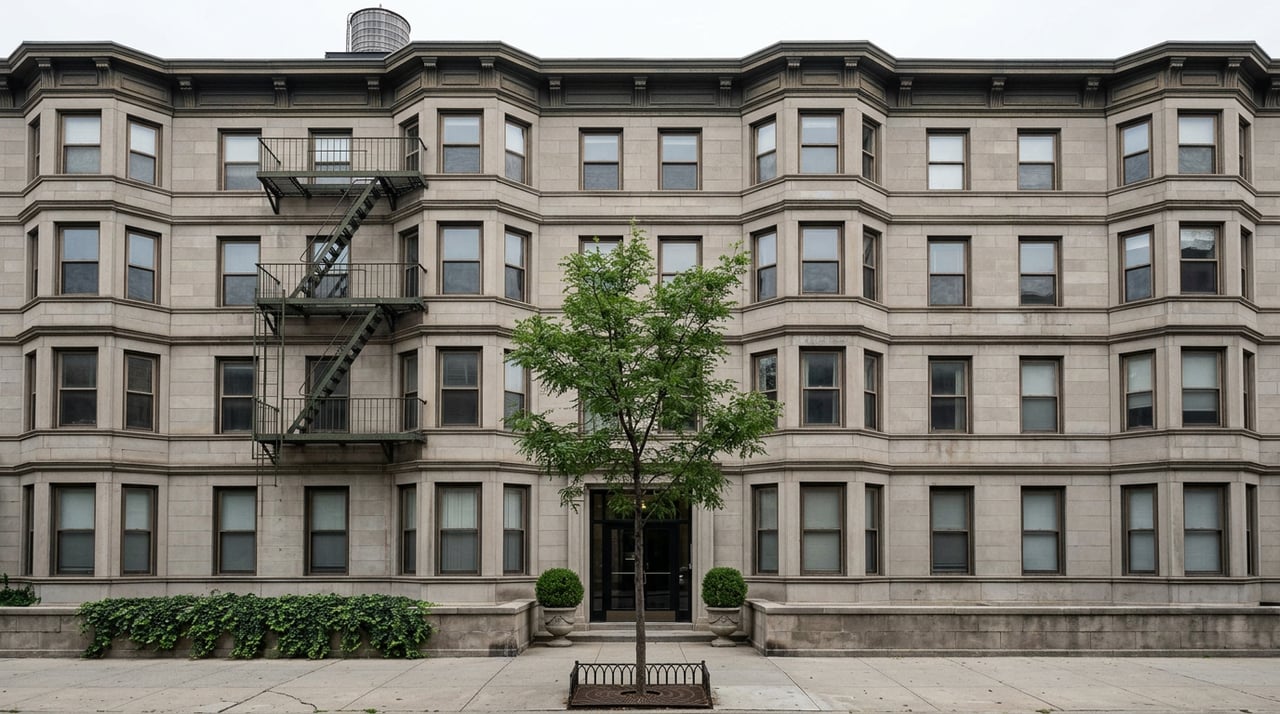
That helps explain why Brooklyn co-ops can vary so much. You may see modest walk-up conversions, smaller postwar buildings, or elevator properties with more traditional service levels. In Manhattan, buyers more often encounter buildings where elevator access and a more amenity-driven profile are standard expectations.
Amenities can affect cost and lifestyle
A more service-heavy building often comes with higher monthly costs. Manhattan co-op monthly maintenance averaged $2,938 in Q4 2025, according to Elliman’s Manhattan report. While the report does not set a borough-wide rule, it helps explain why Manhattan buyers often face heavier carrying costs.
For you, that means the comparison should go beyond purchase price. A lower-priced apartment with manageable maintenance may fit your long-term budget better than a building with a higher monthly burn, even if the location or services are appealing.
Financing expectations can be stricter in Manhattan
Every co-op sets its own standards, but buyers across New York City should plan for meaningful upfront cash and post-closing liquidity. A Brown Harris Stevens co-op planning guide notes that buyers typically need 20% to 25% down and that boards often want 12 to 24 months of mortgage-plus-maintenance reserves in liquid assets.
That is a planning benchmark, not a universal rule. Some buildings may be more flexible, while others may require more. Still, the numbers are useful because they reflect how co-op boards often assess financial stability.
Manhattan often rewards stronger liquidity
Recent market data suggest that Manhattan is more liquidity-sensitive than Brooklyn. In Q3 2025, Manhattan’s combined co-op-and-condo market was 65.3% cash, compared with 47.9% in Brooklyn, according to Elliman’s quarterly market report. That does not mean financed buyers cannot succeed in Manhattan, but it does suggest a market where cash strength and reserves may matter more.
This is one reason some buyers feel Brooklyn gives them a wider path to entry. Depending on the building, Brooklyn may present more opportunities where price points and financial thresholds feel more attainable. Even so, the building-specific board package still matters just as much as the borough.
Board culture matters more than borough lines
This may be the most important takeaway in the entire comparison. The main approval difference between Brooklyn and Manhattan is not borough law. It is building culture.
The Attorney General’s guidance for co-op board directors explains that boards must act as a body and follow their internal rules, but board members may or may not be formally trained in co-op governance. In real life, that means the approval process is shaped by each building’s finances, house rules, and board style.
What buyers usually experience
In Manhattan, higher prices, higher maintenance, and a larger cash share can make boards feel more focused on liquidity and financial strength. In Brooklyn, the experience can range from equally selective in prime areas to somewhat more flexible in some outer-borough or postwar buildings. That distinction is an inference from current market data, not a formal rule.
For you, the lesson is simple: never assume a borough tells the whole story. One Brooklyn co-op may be more demanding than a Manhattan building a few subway stops away. The smartest approach is to review each building on its own terms before you fall in love with the apartment.
What this means for your search
If you are choosing between Brooklyn and Manhattan co-ops, your decision usually comes down to priorities. Brooklyn often appeals to buyers who want more space, more layout variety, and a broader pricing range. Manhattan often appeals to buyers who prioritize service-heavy buildings, elevator access, and neighborhoods where pricing and carrying costs are typically higher.
A side-by-side comparison can help:
| Factor | Brooklyn Co-ops | Manhattan Co-ops |
|---|---|---|
| Typical pricing | Lower median overall, but varies widely by submarket | Higher median overall |
| Space | Often more space per dollar | Often smaller layouts at higher price points |
| Building stock | More mixed, including walk-ups and postwar buildings | More elevator and service-oriented buildings |
| Maintenance profile | Varies by building | Often higher monthly carrying costs |
| Board experience | Highly building-specific | Also building-specific, often perceived as more liquidity-focused |
How to compare the right way
Before you decide that one borough is a better fit, compare co-ops using the factors that actually affect your purchase and your daily life.
Review the full monthly cost
Look at maintenance, mortgage payment, and expected liquidity after closing. A lower purchase price does not always mean a lower cost of ownership.
Study the building package
The offering documents, house rules, and financial requirements tell you more than the address alone. They can reveal whether the building is conservative, flexible, or somewhere in between.
Match layout to your needs
If you need more rooms or long-term flexibility, Brooklyn may open more options. If you prefer elevator access and a more service-oriented building profile, Manhattan may offer more of what you want.
Expect nuance in every deal
The most accurate co-op advice is rarely borough-wide. It is building-specific, budget-specific, and timing-specific.
If you are weighing Brooklyn against Manhattan, the goal is not just to find the better apartment. It is to find the better fit for your finances, approval profile, and long-term plans. That kind of comparison gets easier when you have a data-driven advisor who can help you evaluate not only price, but also board standards, carrying costs, and building-level tradeoffs. If you are ready to talk through your options, Matthew Melinger can help you compare the market with clarity and strategy.
FAQs
How does a Brooklyn co-op differ from a Manhattan co-op in ownership structure?
- Brooklyn and Manhattan co-ops use the same ownership model: you buy shares in a corporation tied to a specific apartment and receive a proprietary lease.
How do Brooklyn co-op prices compare with Manhattan co-op prices?
- Manhattan co-ops are generally more expensive, with a Q4 2025 median sales price of $825,000 versus $499,500 in Brooklyn.
How do Brooklyn co-op apartment sizes compare with Manhattan co-op sizes?
- Brooklyn generally offers more larger-home inventory, while Manhattan has a higher share of studios and one-bedrooms.
How do co-op board requirements differ between Brooklyn and Manhattan?
- The biggest differences usually come from each building’s board culture, financial standards, and house rules rather than from the borough itself.
How much cash do you usually need to buy a co-op in Brooklyn or Manhattan?
- A practical planning baseline is often 20% to 25% down plus 12 to 24 months of mortgage-and-maintenance reserves, though each building can set its own standards.